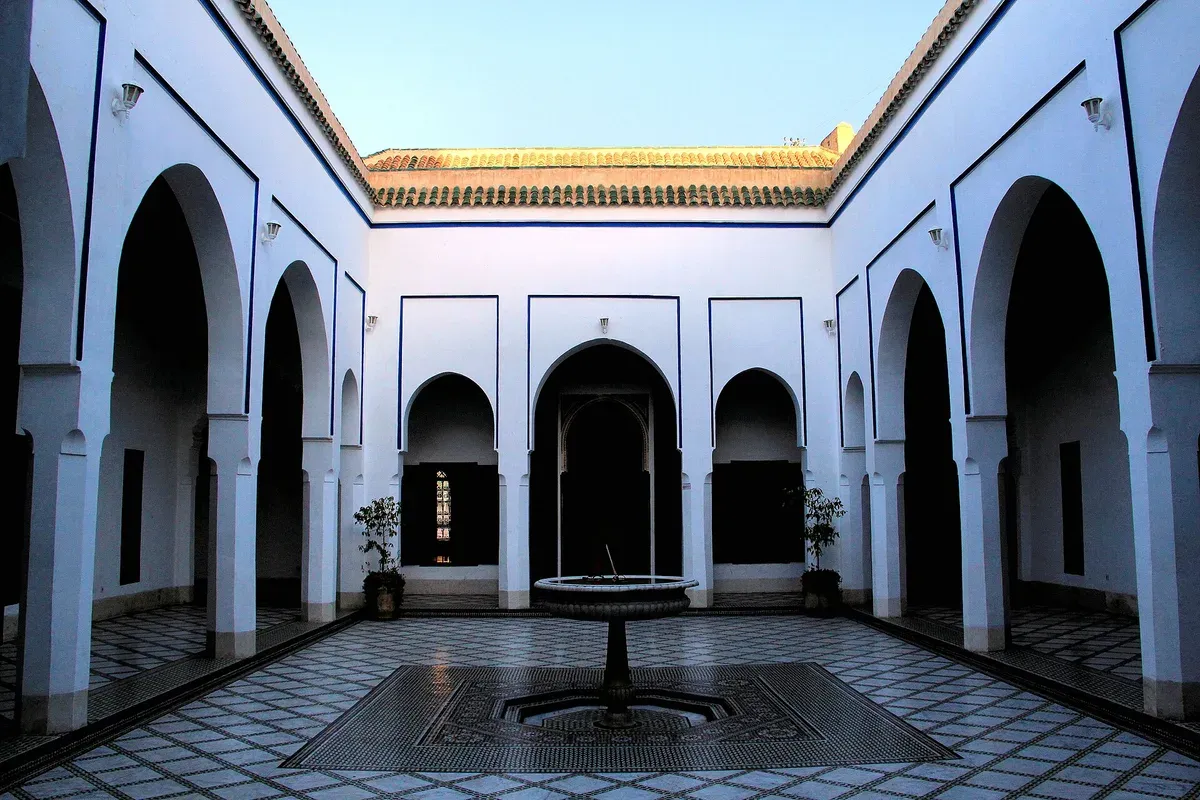
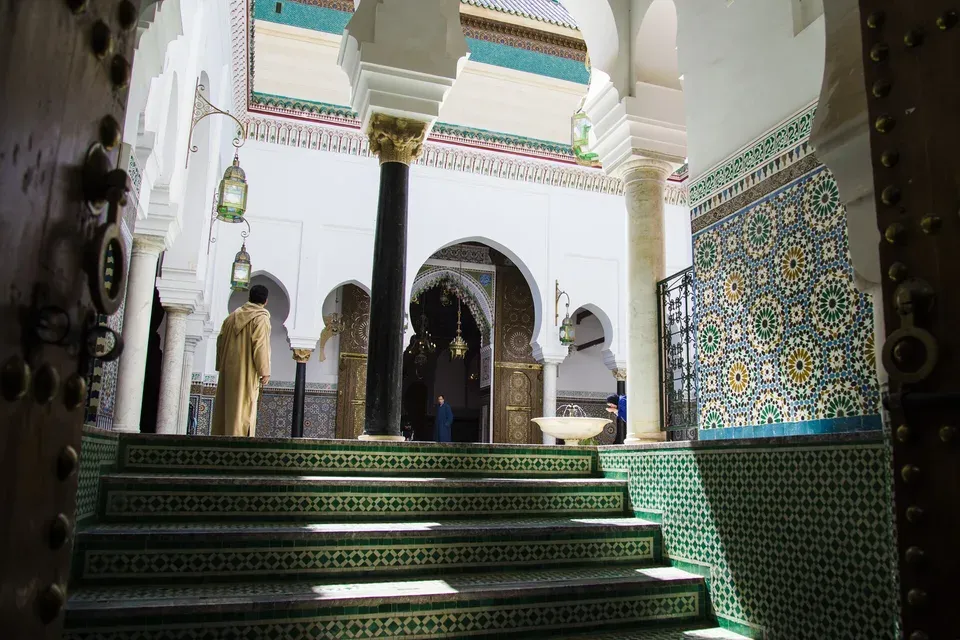
Stepping off a bustling lane in Marrakech or Fes through a heavy cedar door into a traditional riad is one of travel’s finest architectural contrasts. Outside, mopeds and donkey carts weave past spice sacks; inside, birdsong echoes off a tiled fountain shaded by bitter-orange trees, while thick earthen walls block midday sun.
Yet choosing the wrong riad—or picking a medina stay when your trip calls for early-morning vehicle departures—can bring unexpected friction: dragging luggage twenty minutes through dark derbs (dead-end alleys), hearing every doorway conversation across an open central patio, or shivering in unheated stone rooms during January nights.
Riad vs. Dar vs. Ville Nouvelle Hotel
- Riad: Derived from the Arabic word for garden (ryad), a true riad centers around an interior courtyard planted with citrus trees and a central fountain or plunge pool, typically hosting just 4 to 12 guestrooms.
- Dar: Structurally similar inward-facing townhouse, usually smaller with a tiled patio instead of a planted garden.
- Ville Nouvelle Hotel (Gueliz / Hivernage / Fes New City): Built along tree-lined boulevards outside historic city walls, offering elevators, direct taxi drop-offs, spacious soundproofed rooms, fitness facilities, and reliable climate control.
Consult Visit Morocco for certified accommodation classifications across imperial cities and coastal towns.
What to Check Before Booking a Medina Riad
1. Alley Access and Porter Transfers
Vehicles cannot enter pedestrian medinas. Good riads in Marrakech and Fes el-Bali sit within a 3-to-5-minute flat walk of a named city gate (Bab), such as Bab Bou Jeloud in Fes or Bab Doukkala / Riad Zitoun in Marrakech, and gladly arrange a staff member with a wooden luggage cart to meet your taxi on arrival. Avoid properties buried 15 minutes deep inside twisting unlit alleys if arriving late at night.
2. Courtyard Acoustics and Window Orientation
Because every traditional riad room opens inward onto the central atrium for privacy and airflow, sound carries upward effortlessly. Light sleepers should request upper-floor rooms away from ground-level breakfast patios, or choose boutique riads that keep interior doors solid cedar with acoustic seals.
3. Seasonal Heating and Rooftop Shade
Desert-adjacent winters in Marrakech and Fes drop to 5°C–8°C overnight between December and February. Confirm your room includes reversible AC/heating (not just summer cooling), and enjoy sunny midday lunches up on the rooftop terrace, where views sweep across satellite dishes, stork nests, and Atlas snowpeaks.
4. Essaouira Coastal Alternative
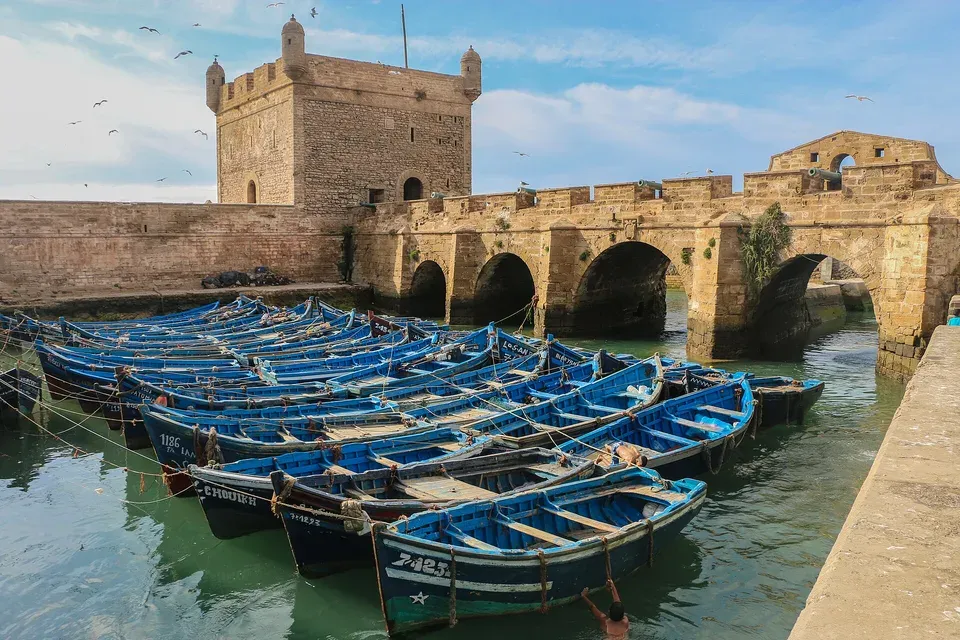
Along the breezy Atlantic coast, Essaouira’s compact grid-like medina eliminates labyrinth stress altogether—its white-and-blue rampart dars sit steps from the fishing port and wide sandy crescent, though pack a windbreaker since Atlantic gusts blow briskly year-round.
Quick Decision Matrix
| Travel Style | Better Fit | Why |
|---|---|---|
| First-time cultural immersion (2–4 nights) | Medina Riad near a main gate | Homemade breakfast on the terrace, attentive local hosts, walk-everywhere access |
| Early morning Sahara/train departures or families with strollers | Ville Nouvelle Hotel (Gueliz/Agdal) | Direct car pull-up, elevators, predictable quiet sleep, easy parking |
| Multi-city trip (Marrakech + Fes + Essaouira) | Split Stay | Book riads in Fes/Essaouira and a quiet garden hotel or outer-edge riad in Marrakech |
Note that Moroccan tourism levies a modest nightly municipal tax (typically 15–30 MAD per person/night) paid locally in cash at checkout.
Breakfast, Mint Tea, and Riad Hospitality Customs
Unlike impersonal chain hotels, riads operate like small family estates. Most stays greet arriving guests in the courtyard with fresh mint tea and Moroccan almond pastries while hosts sketch walking shortcuts onto a paper medina map—an invaluable briefing that cuts navigation confusion in half. Breakfast is usually freshly squeezed orange juice, flaky square msemen pancakes, baghrir semolina crumpets with honey, olives, yogurt, and strong coffee served at your pace on the sunny terrace.
If you plan to eat dinner inside the riad, confirm by 11:00 AM that same morning: riad cooks shop daily at local neighborhood markets for fresh lamb, preserved lemons, and seasonal vegetables rather than holding frozen dishes in industrial pantries. Remember too that traditional medina properties rarely serve alcohol in public areas unless specifically licensed—respect household customs, carry a light scarf or sweater for cool rooftop evenings, and tip porters and housekeepers discreetly in cash dirhams at departure.
Choosing Between Fes, Marrakech, and Chefchaouen
- Fes el-Bali: Stay near Bab Bou Jeloud (Blue Gate) or Talaa Kebira’s upper rim so airport taxis and day-trip drivers reach you within a three-minute walk.
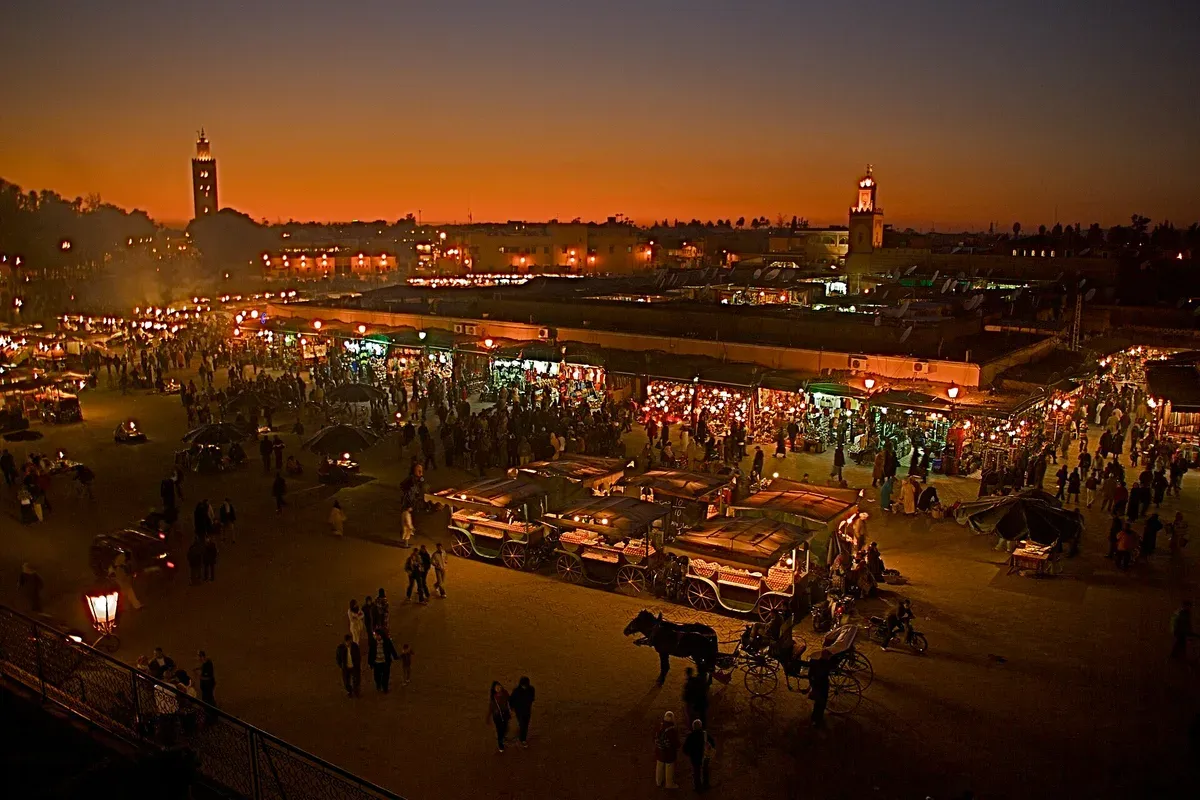
- Marrakech: Neighborhoods like Riad Zitoun, Mouassine, and Kasbah balance calm residential alleys with ten-minute walks to Jemaa el-Fnaa and Bahia Palace.
- Chefchaouen: Blue-washed hillside dars sit on steep staircases; book near the eastern Bab el Ain or northern Ras El Ma perimeter if carrying rolling luggage.
Pair this accommodation guide with our deep dive into Marrakech’s medina souks, craft guilds, and tagines.